BIW Welding-Line SCADA车身焊装线 SCADA
A conceptual SCADA design for an automotive Body-In-White welding line, plus a physical evaluation of a low-cost K-type thermocouple chain for monitoring spot-weld electrode cooling-water ΔT. A MEC5882 group project (Group L2).为汽车车身焊装(BIW)线做的概念级 SCADA 设计,加上对一条低成本 K 型热电偶链的物理评估,用于监测点焊电极冷却水温差 ΔT。MEC5882 组项目(Group L2)。
A Body-In-White welding line lays down thousands of resistance spot welds per body, and weld quality hinges on electrode-tip temperature — which is governed by the cooling-water flow and its inlet/outlet ΔT. The project asks how to monitor that, reliably and cheaply.车身焊装线每台车要打数千个电阻点焊,焊接质量取决于电极尖端温度——而后者由冷却水流量及其进出口温差 ΔT 决定。项目要解决的是:如何可靠又便宜地监测它。
01The SCADA designSCADA 设计
We designed a four-layer SCADA architecture (field-instrumentation, control, supervisory, data) for a BIW line — a line that typically runs 200–400 robots and 40–60 bodies/hour. Functional requirements were derived from three stakeholder groups (OEM, operators, regulators), with two-tier ΔT alarms at 5 °C (warning) and 8 °C (trip), plus a critical tier when high ΔT and loss-of-flow occur together.我们为 BIW 线设计了四层 SCADA 架构(现场仪表、控制、监控、数据)——这种线通常 200–400 台机器人、每小时 40–60 台车。功能需求来自三类利益方(OEM、操作员、监管),设两级 ΔT 报警:5 °C(警告)、8 °C(跳停),并在高 ΔT 与失流同时发生时设临界级。
02Physical sensor evaluation物理传感评估
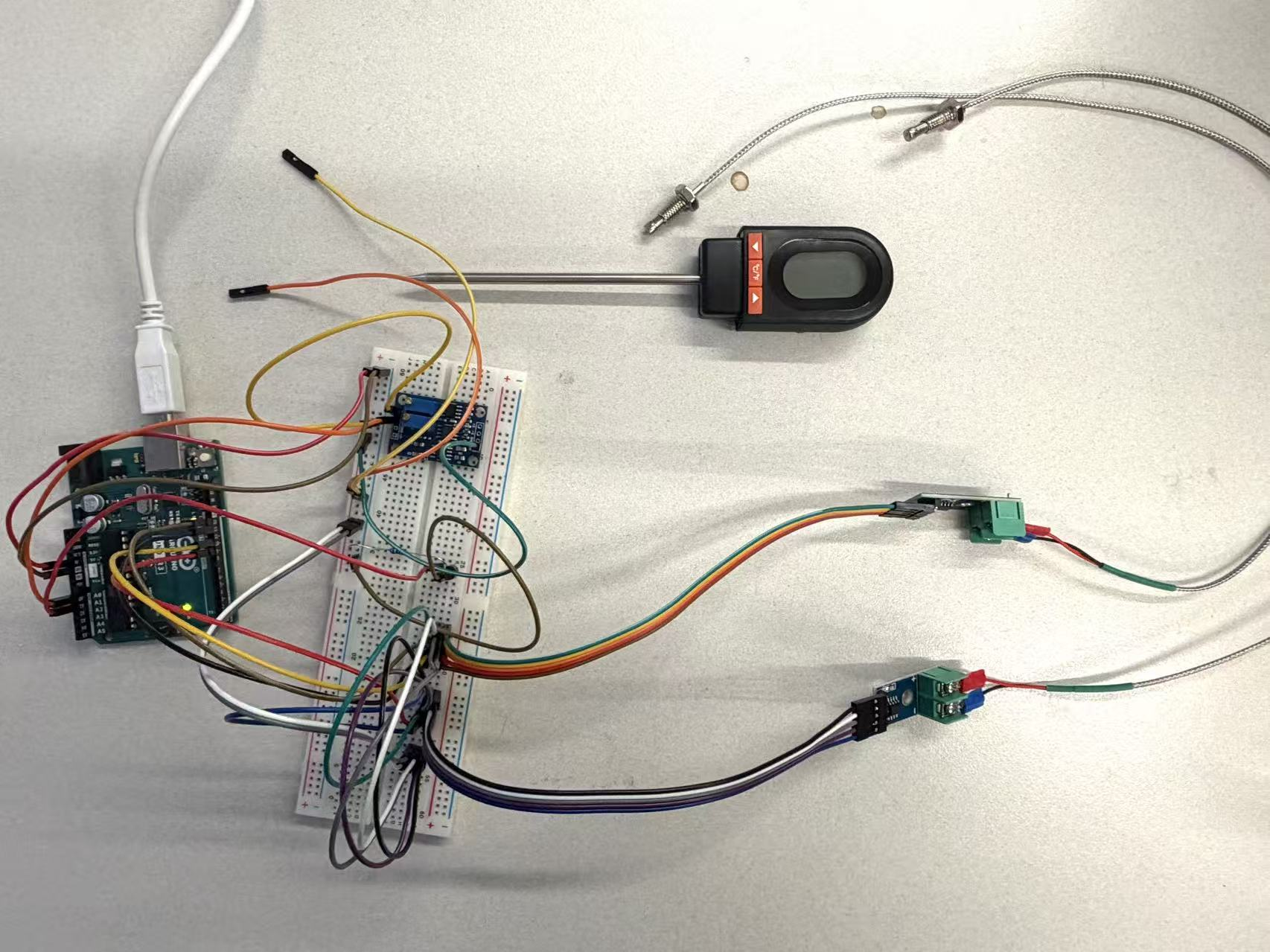
To prove the cheap end of the system was trustworthy, I helped characterise a K-type chain through a MAX6675 converter against a laboratory reference across 41–97 °C:为证明系统廉价的一端可信,我参与把一条经 MAX6675 转换的 K 型热电偶链在 41–97 °C 区间对实验室参考做特性标定:
- Bare-metal probe: R² = 0.9933, mean bias −0.11 °C (passes R² > 0.99 and |bias| < 1 °C).裸金属探头:R² = 0.9933,平均偏置 −0.11 °C(通过 R² > 0.99 与 |偏置| < 1 °C)。
- Sheathed probe: R² = 0.9983, with a correctable sheath offset.带护套探头:R² = 0.9983,护套偏置可软件校正。
03Uncertainty & resolvability不确定度与可分辨性
A formal Type-A/Type-B uncertainty budget gave a combined standard uncertainty u_c ≈ 0.78 °C and an expanded uncertainty U (k = 2) ≈ 1.6 °C. ΔT validation runs at 7.5 °C and 4.5 °C produced non-overlapping 95% confidence intervals — confirming the chain can statistically distinguish the 5 °C / 8 °C alarm thresholds.正式的 A 类/B 类不确定度预算给出合成标准不确定度 u_c ≈ 0.78 °C、扩展不确定度 U(k = 2)≈ 1.6 °C。7.5 °C 与 4.5 °C 的 ΔT 验证给出不重叠的 95% 置信区间——证实该链能在统计上分辨 5 °C / 8 °C 报警阈值。
The conclusion: a MAX6675-based dual-probe ΔT subsystem meets the accuracy requirement at very low cost (under AUD 30 in components) and is recommended for integration into the BIW SCADA architecture — with future work on a wider calibration range and dynamic response under weld pulses.结论:基于 MAX6675 的双探头 ΔT 子系统以极低成本(元件 < AUD 30)满足精度要求,推荐纳入 BIW SCADA 架构——未来工作包括拓宽标定范围与焊接脉冲下的动态响应。
Wind-Turbine Wake风电机组尾流
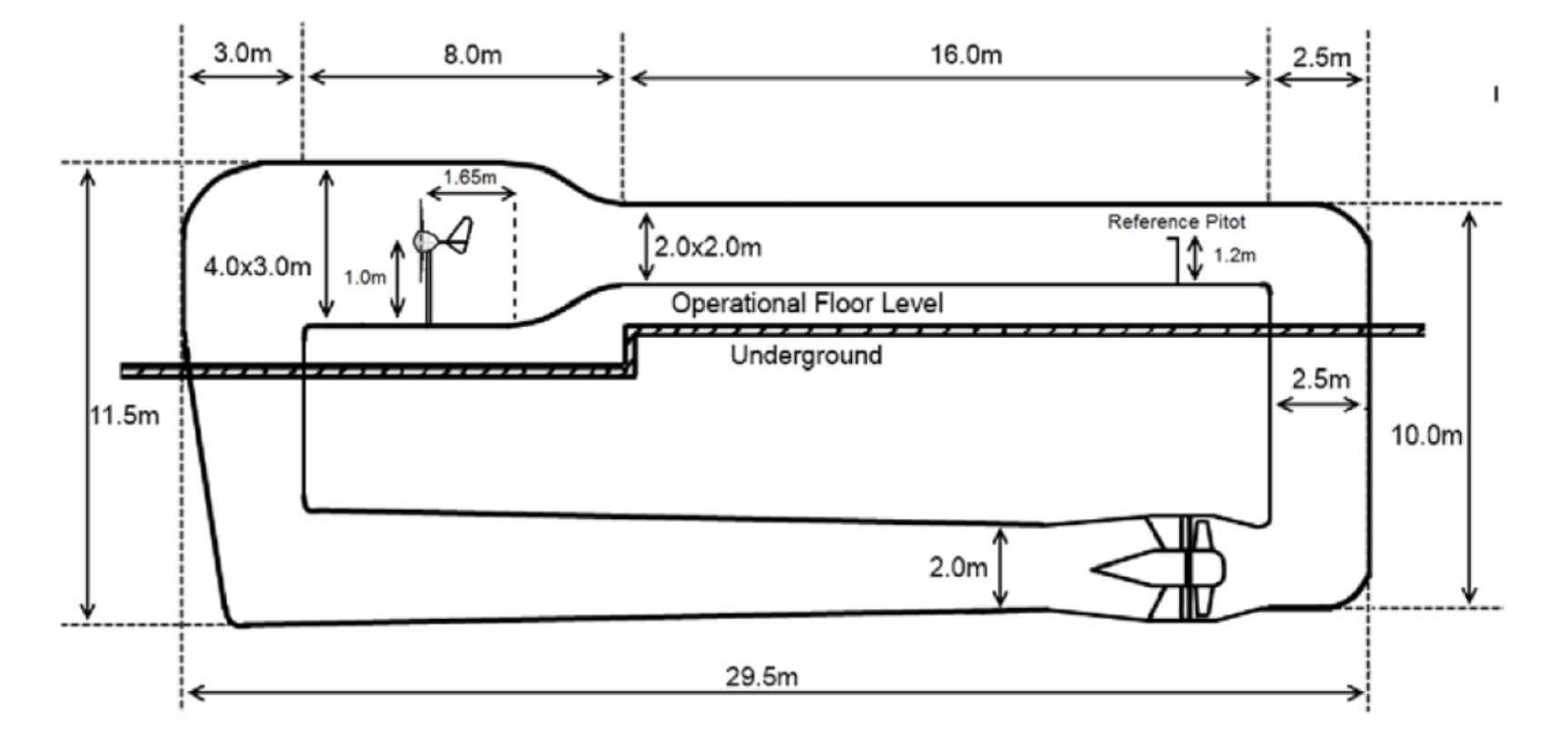
A wind-tunnel study of single- and twin-turbine performance (TSR–Cp) and the wake recovery that sets turbine spacing. A MEC5888 group projec单/双风机性能(TSR–Cp)的风洞实验,以及决定风机间距的尾流恢复研究。MEC5888 组项目;我贡献了尾流/间距分析与部分结论。