Wind-Turbine Wake风电机组尾流
A wind-tunnel study of single- and twin-turbine performance (TSR–Cp) and the wake recovery that sets turbine spacing. A MEC5888 group project; I contributed the wake / spacing analysis and part of the conclusions.单/双风机性能(TSR–Cp)的风洞实验,以及决定风机间距的尾流恢复研究。MEC5888 组项目;我贡献了尾流/间距分析与部分结论。
Put two wind turbines too close and the downstream one runs in the wake of the first — slower, more turbulent air and lost power. The experiment asks how far apart they actually need to sit.两台风机离太近,下游那台就运行在上游的尾流里——风更慢、更湍,功率损失。实验要回答:它们到底需要隔多远。
01The experiment实验
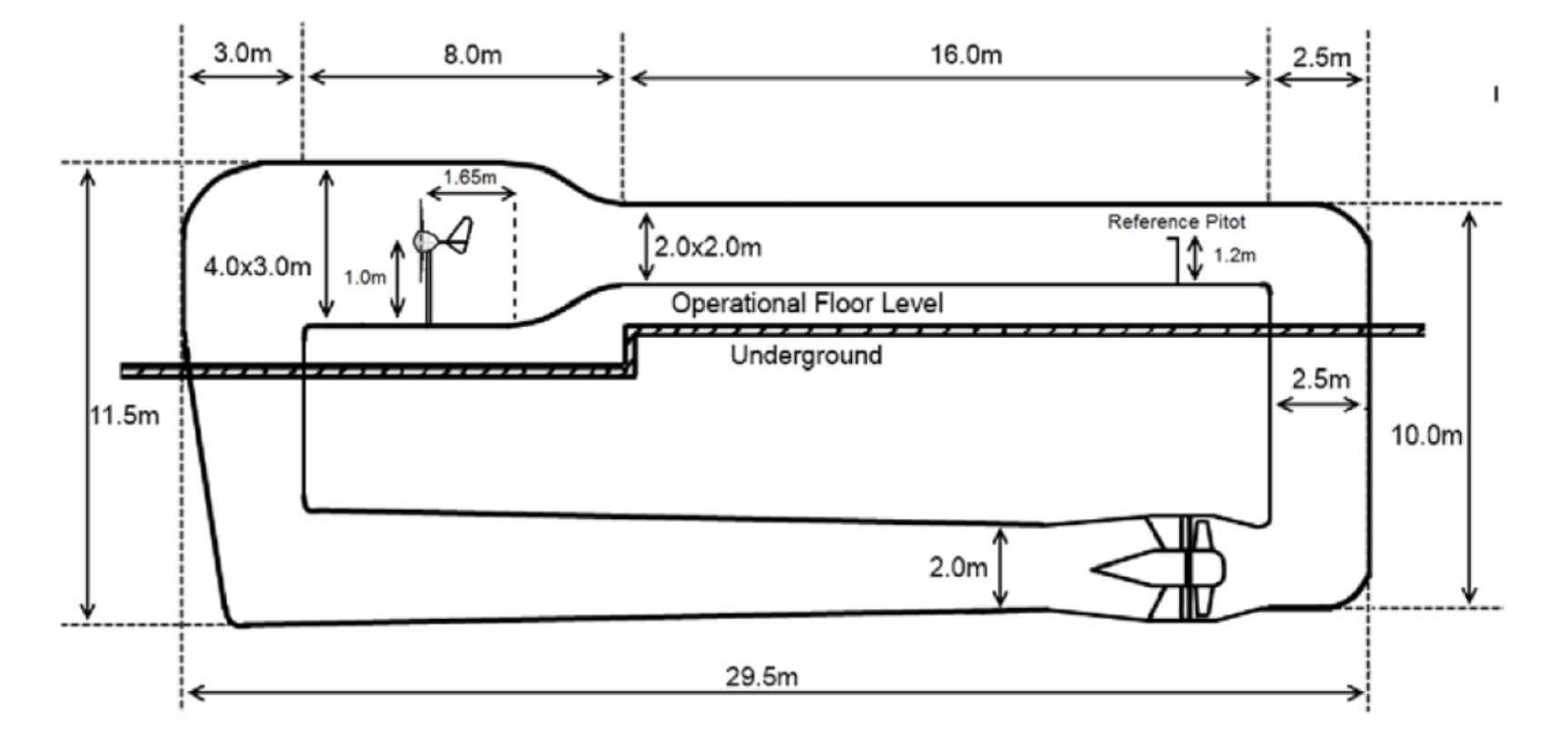
Working as a group in the Monash Large Wind Tunnel, we measured single- and twin-turbine TSR–Cp curves (power coefficient vs tip-speed ratio) and compared them against the Betz limit, then traversed the wake of the upstream turbine.在莫纳什大型风洞里以小组形式工作,我们测量单/双风机的 TSR–Cp 曲线(功率系数 vs 叶尖速比)并与 Betz 极限对比,再对上游风机的尾流做测量。
02Wake & spacing — my part尾流与间距 — 我负责的部分
The second turbine was tested at 2D, 4D, 6D and 7.75D downstream (D = rotor diameter). At 2D and 4D the velocity deficit was still severe — a turbine there would be starved of energy. By 6D and 7.75D the wake had largely recovered. Comparing the measured recovery against a Jensen far-wake model and the velocity profiles, I concluded that roughly 6D and beyond is the practical floor for siting the downstream turbine.第二台风机在下游 2D、4D、6D、7.75D 处测试(D = 风轮直径)。2D、4D 处速度亏损仍严重——放那里的风机会缺能。到 6D、7.75D 尾流已基本恢复。将实测恢复与 Jensen 远尾流模型及速度剖面对比后,我得出 ~6D 及以上是下游风机选址的实用下限。
03Why it matters意义
Spacing is a direct trade-off between land use and annual energy yield: pack turbines closer and you lose power to wakes; spread them out and you need more land. The wake data plus the Jensen comparison turn that into a defensible, numbers-backed siting recommendation.间距是土地利用与年发电量之间的直接权衡:排得越密,尾流损失越多;铺得越开,占地越大。尾流数据加 Jensen 对比,把它变成一个有数据支撑、站得住脚的选址建议。
KUKA Spatial KinematicsKUKA 空间运动学
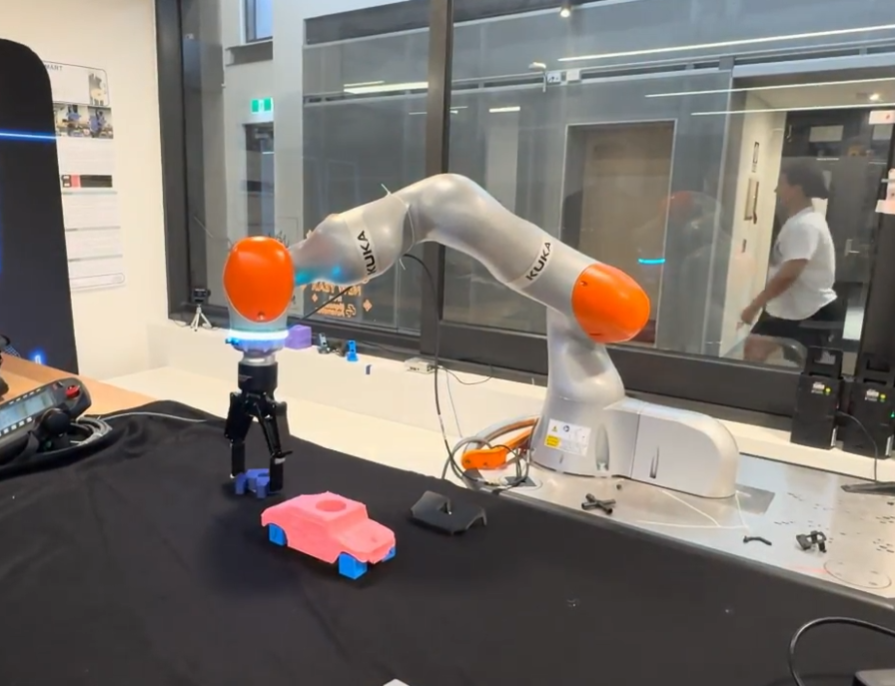
Spatial kinematics and trajectory work on an industrial KUKA arm — Denavit–Hartenberg modelling and motion verification, taken from theory t工业 KUKA 机械臂的空间运动学与轨迹工作——Denavit–Hartenberg 建模与运动验证,从理论一路做到实验室里的实体机器人。M