3D-Printer Hotend Retrofit3D 打印机热端改装
An ENG5105 client project for ForgeFab: redesign a 3D-printer hotend so a batch of mistakenly-bought Prusa MK4 nozzles can run on the older MK3 S+ platform — benchmarked with thermal & structural FEA, consolidated into a manufacturable, serviceable design.ENG5105 客户项目(ForgeFab):重设计 3D 打印机热端,让误购的一批 Prusa MK4 喷嘴能用在较旧的 MK3 S+ 平台上——用热与结构 FEA 做基准,整合成可制造、易维护的设计。
The brief was unusually concrete: ForgeFab had bought a batch of Prusa i3 MK4 nozzles that don't fit their MK3 S+ printers. Throwing them out would be waste — so the task was to retrofit, not replace.任务异常具体:ForgeFab 误购了一批 Prusa i3 MK4 喷嘴,装不进他们的 MK3 S+ 打印机。扔掉是浪费——所以任务是改装适配,而非替换。
01The client brief客户需求
Adapt the MK4 nozzle to run on the MK3 S+ without compromising print quality, dimensional accuracy or speed — a sustainability-driven retrofit (UN SDG 12, responsible consumption). That meant resolving the geometric, thermal and interface mismatches between two printer generations, around a specified heating element, heat-break and extruder.让 MK4 喷嘴在 MK3 S+ 上运行而不牺牲打印质量、尺寸精度与速度——一个可持续驱动的改装(联合国 SDG 12,负责任消费)。这意味着围绕指定的加热元件、热断与挤出机,解决两代打印机之间的几何、热与接口不匹配。
02Benchmarking the baseline基准测试
First we established what 'good' looks like by benchmarking the MK3 S+ hotend — both physically (print tests, thermal-imaging) and numerically (static and steady-state thermal FEA in ANSYS) — so any retrofit could be held to or above that baseline.我们先通过对 MK3 S+ 热端做基准测试来确立「好」的标准——既有物理测试(打印试验、热成像),也有数值分析(ANSYS 静力与稳态热 FEA)——使任何改装都能对齐或超越该基线。
03Consolidating to the final design整合出最终设计
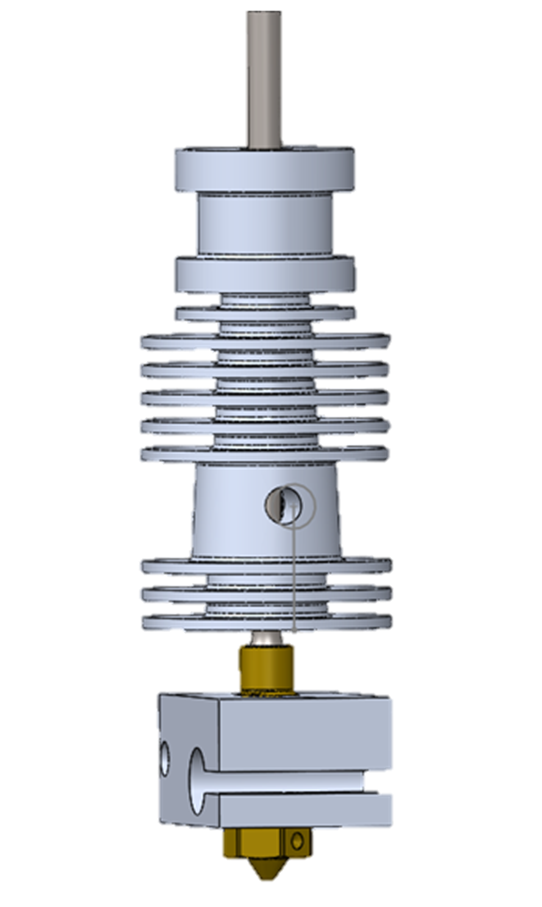
Several pod concepts were proposed; through a weighted evaluation (thermal performance, manufacturability, ease of maintenance, MK4 compatibility, reliability) they were consolidated into one integrated design — keeping the proven nozzle-fastening method while improving the heat path and serviceability.pod 内提出多个概念;经加权评估(热性能、可制造性、易维护、MK4 兼容、可靠性)整合成一个集成设计——保留经验证的喷嘴紧固方式,同时改善热路径与可维护性。
- Materials & interfaces: Al-6061 heat-sink, C145 copper heater block and brass nozzle, with realistic contact-conductance values at the assembly joints.材料与接口:Al-6061 散热器、C145 铜加热块、黄铜喷嘴,装配结合处设真实接触热导。
- Serviceability: mounting holes re-aligned to the existing screw pattern and adjacent fins removed for tool access, so a nozzle swap is fast (M4×0.7 fastener, anti-rotation key slot).可维护性:安装孔对齐原有螺纹,移除相邻鳍片留出工具通道,使换嘴更快(M4×0.7 紧固 + 防转键槽)。
04Simulation & verdict仿真与结论
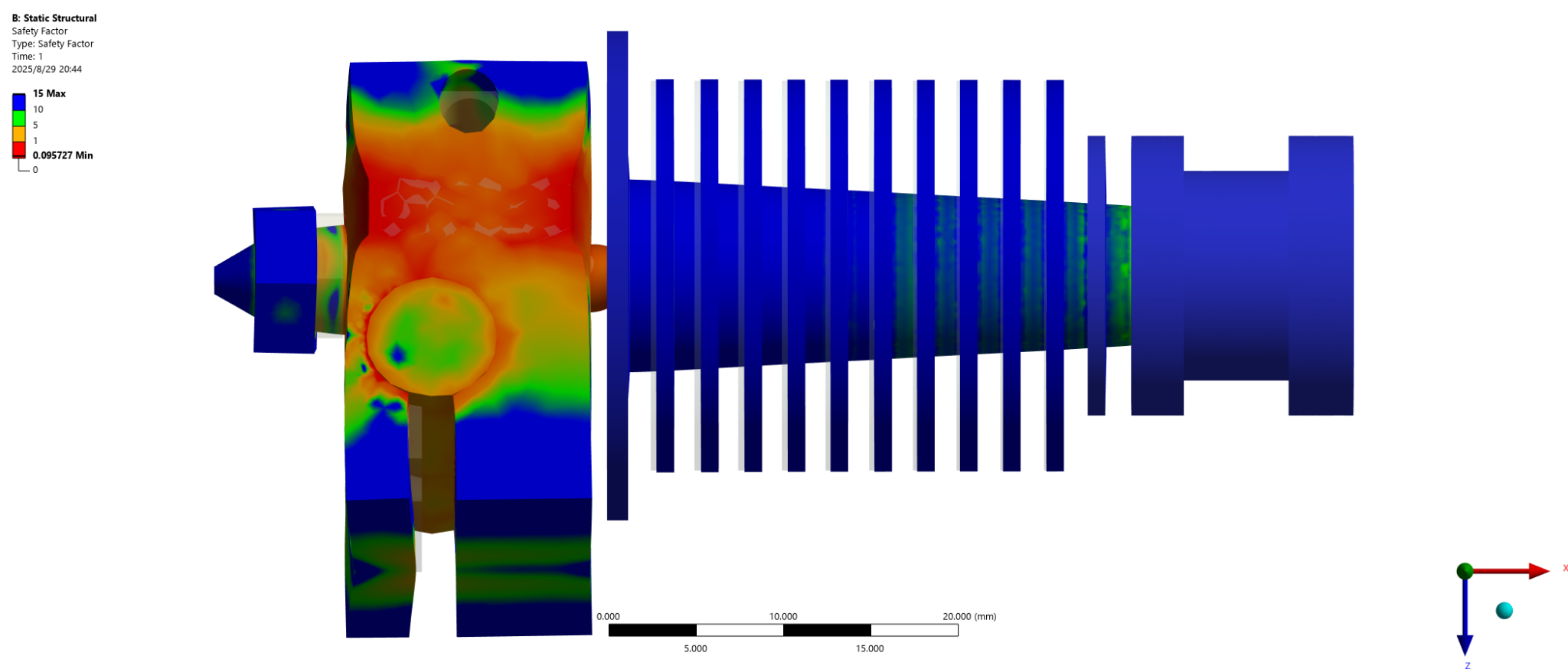
A steady-state thermal FEA (quadratic mesh, ~0.96 M elements) was mapped into a structural model to check stiffness and safety, and inner-wall heat-flux was integrated to quantify the energy pathways. The design was prepared for manufacture (two-setup CNC route) with a recommended operating window of ~20–25 mm³/s pending physical validation by IR thermography and a flow–power benchmark.稳态热 FEA(二次网格,~0.96 M 单元)映射到结构模型核对刚度与安全,并对内壁热流积分量化能量通路。设计已为制造做好准备(两次装夹 CNC),推荐工作窗口 ~20–25 mm³/s,待 IR 热成像与流量–功率基准做物理验证。
BIW Welding-Line SCADA车身焊装线 SCADA
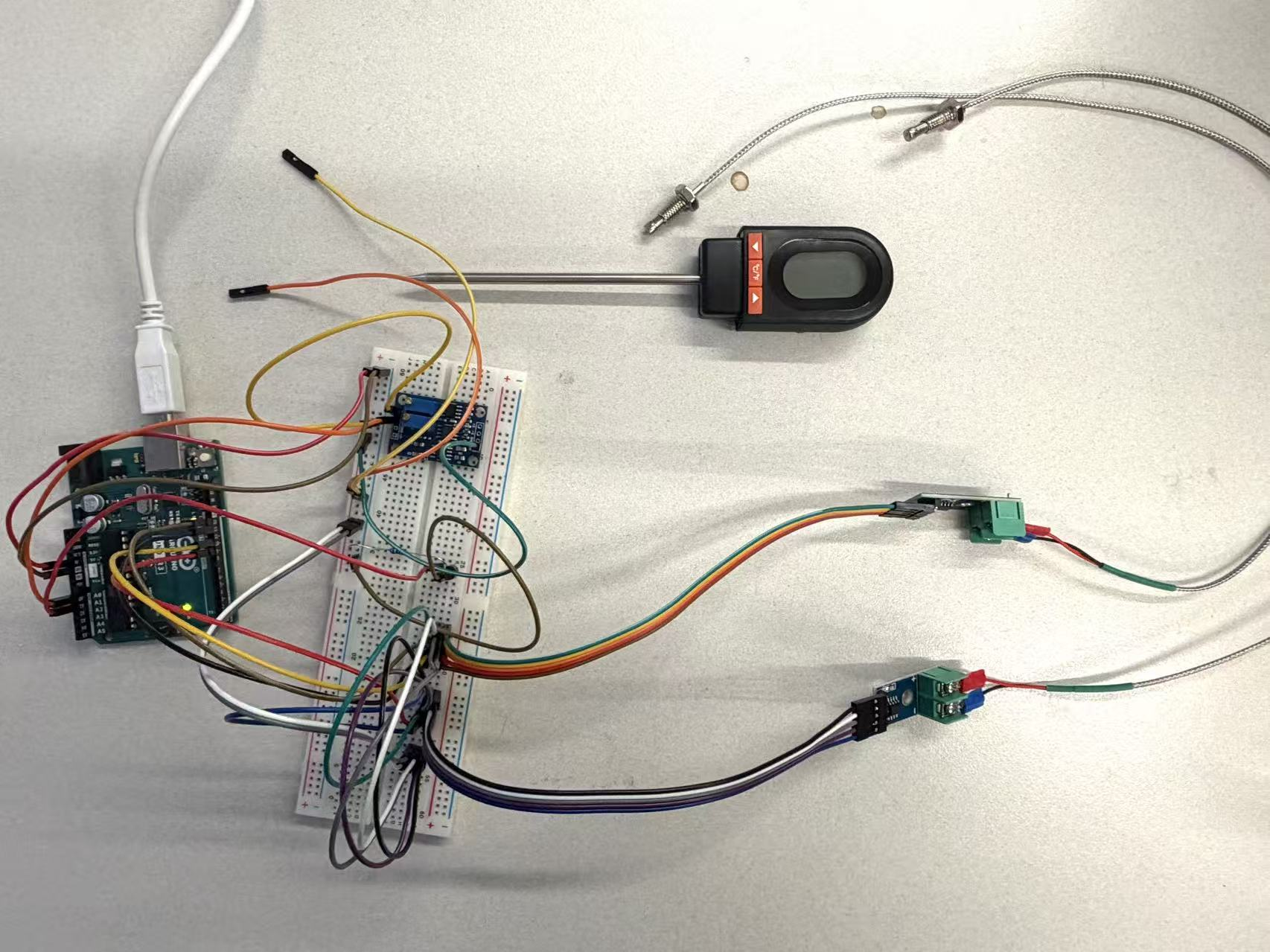
A conceptual SCADA design for an automotive Body-In-White welding line, plus a physical evaluation of a low-cost K-type thermocouple chain f为汽车车身焊装(BIW)线做的概念级 SCADA 设计,加上对一条低成本 K 型热电偶链的物理评估,用于监测点焊电极冷却水温差 ΔT。MEC